

Research Overview
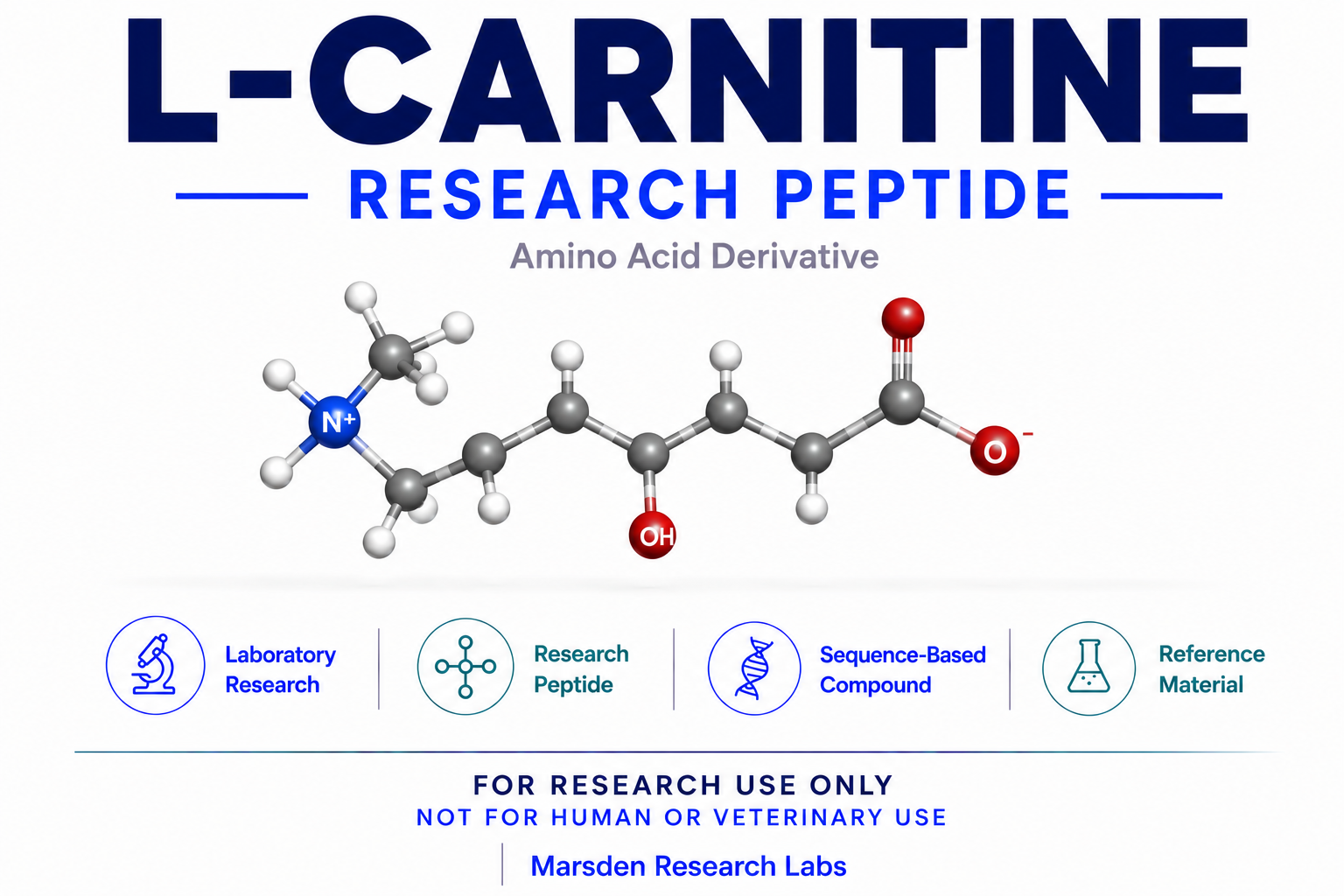
L-Carnitine, also known as Levocarnitine, is a naturally occurring quaternary ammonium compound involved in cellular acyl-group metabolism and mitochondrial fatty acid transport. It is widely investigated in laboratory research involving the carnitine shuttle, mitochondrial β-oxidation, acylcarnitine metabolism, cellular bioenergetics, and mitochondrial metabolic pathways.
L-Carnitine is supplied by Marsden Research Labs exclusively for qualified laboratory research applications and is not offered for human or veterinary use.
Chemical Information
| Compound Name | L-Carnitine |
| Common Name | Levocarnitine |
| Compound Type | Naturally occurring quaternary ammonium compound |
| Chemical Formula | C7H15NO3 |
| Molecular Weight | Approximately 161.20 g/mol |
| Chemical Classification | Endogenous carnitine compound involved in mitochondrial acyl-group transport and metabolism. |
Physical Characteristics
| Appearance | White crystalline or lyophilized material, depending on formulation. |
| Solubility | Readily soluble in water under laboratory conditions. |
| Storage | Store in a tightly closed container under conditions appropriate for the individual research material. |
| Stability | Stability depends on the characteristics of the research material and may be affected by storage temperature, moisture, light exposure, solution conditions, repeated freeze-thaw cycles, and laboratory handling. |
Analytical Verification
Every batch made available for purchase by Marsden Research Labs is supported by current, batch-specific third-party laboratory documentation. Products are not made available for purchase until applicable testing and Certificate of Analysis (COA) documentation are complete. Additional independent laboratory reports may be published for a batch when available.
| Identity Verification | May include Liquid Chromatography–Mass Spectrometry (LC-MS) or comparable analytical methods. |
| Purity Analysis | May include High-Performance Liquid Chromatography (HPLC) or other methods appropriate to the individual sample. |
| Quantitative Analysis | May include quantitative assessment appropriate to the individual batch and analytical method. |
| Batch Traceability | Research batches are assigned unique batch identifiers corresponding to their applicable analytical results and documentation. |
| Certificate of Analysis (COA) | Required for every batch made available for purchase and reflects the analytical results associated with that batch. |
| Laboratory Report | Additional independent laboratory reports may be published for a batch when available. |
Batch-Specific Information
The batch number, analytical results, testing date, Certificate of Analysis (COA), and any additional independent laboratory report displayed near the top of this page correspond to the selected research sample and update automatically when a different batch or package size is selected.
Investigated Molecular Mechanisms
L-Carnitine participates in the mitochondrial carnitine shuttle through reversible formation of acylcarnitine intermediates. Experimental systems use L-Carnitine to investigate the transfer of long-chain fatty-acid-derived acyl groups across the inner mitochondrial membrane and their subsequent availability for mitochondrial β-oxidation.
L-Carnitine is also used as a research tool for investigating acyl-CoA/acylcarnitine balance, mitochondrial metabolic pathways, fatty-acid oxidation, and cellular bioenergetics.
Current Areas of Research
- Mitochondrial carnitine shuttle biology
- Long-chain fatty acid transport
- Fatty acid β-oxidation
- Acylcarnitine metabolism
- Acyl-CoA metabolic regulation
- Mitochondrial bioenergetics
Marsden Research Labs makes no representation regarding clinical outcomes or therapeutic applications.
Laboratory Handling
This material should be handled only by qualified laboratory personnel using appropriate research procedures.
Research samples should be stored and handled according to accepted laboratory practices appropriate to the research material. Material integrity may be affected by temperature, moisture, light exposure, solution conditions, repeated freeze-thaw cycles, and handling methods.
Research Use Notice
This product is supplied exclusively for laboratory research purposes.
It is not intended for human or veterinary use, diagnosis, treatment, cure, prevention of disease, food use, cosmetic use, or consumption of any kind. Purchasers are responsible for ensuring compliance with all applicable laws and regulations governing the acquisition and use of research materials.
Reviews
There are no reviews yet.